

Contents
TL;DR
- The global fintech market in 2025 is booming, with over 65% of adults using at least one fintech app.
- Fintech apps are transforming banking, investing, lending, and budgeting, offering faster, smarter, and personalized financial solutions.
- Top 16 fintech apps include Chime, Robinhood, Revolut, MoneyLion, Coinbase, Stripe, and more, leading innovation with AI, blockchain, and advanced analytics.
- Emerging trends: AI-powered personal finance, embedded banking, decentralized finance (DeFi), biometric security, and sustainable fintech solutions.
- Fintech apps are making financial services more accessible, secure, and user-friendly for consumers and businesses alike.
Introduction
The fintech industry in 2025 is rapidly transforming how people manage money, invest, and access financial services, making banking, payments, budgeting, and investing faster, smarter, and more personalized. With top apps like Chime, Robinhood, and Stripe leading innovation, fintech solutions are now more accessible and user-friendly than ever. For startups and businesses looking to enter this space, understanding market trends, user expectations, and development requirements is crucial. Tools like the App Development Cost Calculator help free ballpark estimate expenses, plan features effectively, and ensure a fintech app is built securely, efficiently, and ready to meet the demands of today’s digital-first users.
What is a Fintech App?
A Fintech (Financial Technology) App is a software application designed to digitize, streamline, and improve the delivery of financial services. These applications run on mobile devices or the web and provide consumers with direct access to financial activities that were traditionally managed by established institutions like banks.
The primary goal of a fintech app is to create a more efficient, transparent, and user-centric financial experience. They achieve this by focusing on specific functions—such as payments, investing, or budgeting—and optimizing them for ease of use and accessibility.
Key differentiators from traditional finance include:
- Automation: Using technology to handle tasks like saving, investing, and expense categorization with minimal user input.
- Speed and Efficiency: Enabling real-time transactions, instant fund transfers, and rapid loan approvals.
- Personalization: Leveraging data analytics and Artificial Intelligence (AI) to offer customized financial advice, product recommendations, and insights.
- Transparency: Offering clear fee structures and easy-to-understand interfaces.
Fintech Industry Growth in 2025
The fintech industry in 2025 is experiencing unprecedented growth, fueled by technological innovation, user trust, and the increasing demand for flexible financial solutions.
- Market Size: The global fintech market is projected to surpass $350 billion in 2025, with a robust CAGR of over 17%, reflecting strong adoption across all regions.
- Investment Surge: Venture capital and private equity investments continue to pour into fintech startups, particularly in neobanking, decentralized finance (DeFi), AI-powered financial tools, and payment solutions. These investments are driving rapid innovation and market expansion.
- Adoption Rate: Over 65% of adults worldwide now use at least one fintech app for daily financial activities, signaling a major shift from traditional banking to digital-first solutions.
Technologies like blockchain, open banking, AI-driven analytics, and digital identity verification are redefining financial services. They enable secure, real-time, and personalized financial experiences, making fintech not just an alternative to traditional banks but a new standard in how people manage, invest, and move money globally.
Top 16 Fintech Apps Dominating 2025
Here are the top-performing fintech apps redefining finance in 2025 — chosen for their innovation, user experience, and market impact.
1. Chime
Founded in 2012, Chime is a leading U.S.-based neobank offering no monthly fees, early direct deposit, and automatic savings features. It primarily serves millennials and underbanked users. In 2025, Chime has integrated AI-driven financial coaching, helping users improve credit scores, automate savings, and avoid debt traps, making banking simpler and more transparent.
2. Robinhood
Launched in 2013, Robinhood is a commission-free investing platform that allows users to trade stocks, ETFs, and cryptocurrencies easily. Its intuitive interface attracts beginner investors, while educational resources empower users to make informed decisions. By 2025, Robinhood will have added AI-based portfolio recommendations and enhanced crypto trading features.
3. Revolut
Founded in 2015, Revolut is a global financial super app offering multi-currency accounts, instant international transfers, crypto trading, and spending analytics. Targeted at frequent travelers and global professionals, Revolut in 2025 includes AI-powered budgeting insights and personalized investment options.
4. MoneyLion
MoneyLion, launched in 2013, combines banking, lending, and investing in one platform. It caters to U.S. users seeking personalized financial solutions, including credit-building tools. In 2025, MoneyLion leverages AI to provide customized financial advice and automated investment recommendations.
5. Coinbase
Established in 2012, Coinbase is a secure cryptocurrency exchange serving both beginners and professional traders. Its platform simplifies crypto buying, selling, and storing. By 2025, Coinbase will offer enhanced DeFi integration and AI-based risk alerts for crypto portfolios.
6. Acorns
Founded in 2012, Acorns helps users invest their spare change into diversified portfolios. It primarily targets beginners and passive investors. In 2025, Acorns has introduced automated goal tracking and AI-driven portfolio optimization, making micro-investing smarter and more effective.
7. Qapital
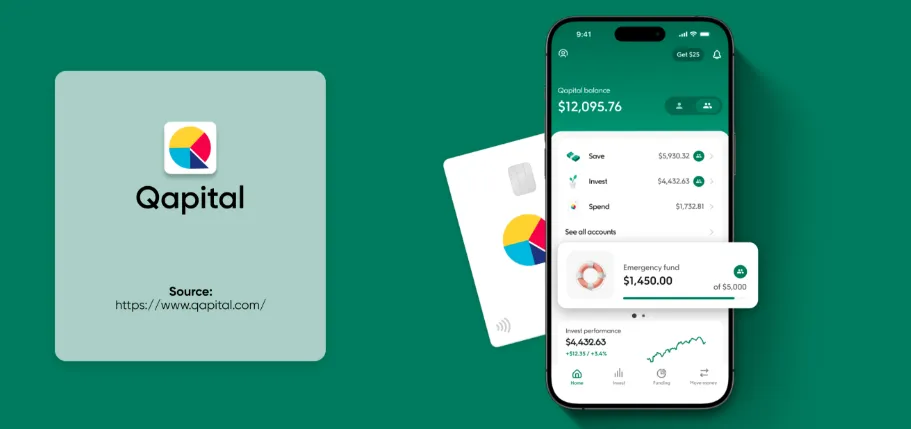
Launched in 2013, Qapital is a goal-based saving app that uses behavioral triggers to help users save efficiently. Its target audience includes young professionals and families. By 2025, Qapital features AI-powered savings suggestions and personalized financial nudges for better money management.
8. Prism
Founded in 2008, Prism organizes all bills in a single dashboard and sends reminders for payments. Ideal for users looking to simplify bill management, Prism in 2025 integrates real-time financial insights and automated bill scheduling to prevent late fees.
9. EveryDollar
Created by financial expert Dave Ramsey in 2014, EveryDollar is a budgeting app based on zero-based budgeting principles. It targets users who want to plan and track every dollar they spend. In 2025, EveryDollar offers AI-driven spending analysis and predictive expense forecasts.
10. Finch
Finch is an innovative hybrid app combining checking and investing, launched in 2020. It appeals to users seeking effortless wealth growth. In 2025, Finch provides automatic investment on idle cash, AI recommendations for savings, and integrated crypto options.
11. N26
Founded in 2013, N26 is a mobile-first European bank offering transparent pricing, instant spending insights, and international usability. By 2025, N26 will use AI-driven financial analytics to optimize users’ spending and savings across multiple currencies.
12. Emma
Launched in 2017, Emma is a smart budgeting app that tracks subscriptions, spending habits, and savings goals. Its main users are millennials and Gen Z. In 2025, Emma features AI-based subscription cancellation alerts and predictive budgeting to help users save more efficiently.
13. Tellus
Tellus offers high-yield savings backed by real estate investments, targeting users looking for better returns on idle cash. In 2025, the platform will introduce automated real estate portfolio diversification and personalized savings plans.
14. EarnIn
Founded in 2013, EarnIn provides early access to wages with zero interest, aimed at helping users manage cash flow between paychecks. By 2025, it will include AI-driven financial health alerts and predictive earnings forecasts.
15. Cuvva
Cuvva is a UK-based insurance app launched in 2014, offering flexible, pay-per-hour car insurance. It primarily serves occasional drivers. In 2025, Cuvva will integrate AI-based risk scoring and instant coverage adjustments for more personalized insurance solutions.
16. Stripe
Founded in 2010, Stripe is a global fintech infrastructure provider powering online payments for businesses. Known for its developer-friendly APIs, it serves startups to enterprises. In 2025, Stripe will offer AI-driven fraud detection, enhanced cross-border payments, and embedded finance solutions, making it a critical platform for modern businesses.
Emerging Trends in Fintech App Development (2025)
The fintech industry is evolving rapidly in 2025, driven by technological innovation, shifting consumer expectations, and the demand for more personalized financial solutions. Several key trends are shaping the development and adoption of fintech apps this year:
- AI-Powered Personal Finance: Artificial intelligence is being used to provide real-time financial insights, personalized budgeting, and automated investment advice. Fintech apps now analyze user behavior and spending patterns to offer tailored recommendations, helping users optimize savings, improve credit scores, and make smarter financial decisions.
- Embedded Finance: More non-financial companies are integrating financial services directly into their platforms, such as payments, lending, or insurance. This trend allows users to access banking services seamlessly within apps they already use, enhancing convenience and engagement.
- DeFi & Blockchain Expansion: Decentralized finance (DeFi) and blockchain technologies are enabling transparent, secure, and borderless financial transactions. Users can participate in peer-to-peer lending, yield farming, and decentralized trading without relying on traditional intermediaries, increasing financial inclusivity.
- Biometric Security: As cybersecurity becomes critical, fintech apps are adopting fingerprint scanning, facial recognition, and multi-factor authentication to ensure secure transactions. Biometric security enhances user trust while reducing the risk of fraud and unauthorized access.
- Sustainability in Fintech: Fintech apps are increasingly incorporating green finance features, such as carbon tracking, sustainable investment portfolios, and eco-friendly payment options. This appeals to environmentally conscious users and promotes responsible financial behavior.
These trends are not only driving innovation but also setting new benchmarks for user experience, trust, and accessibility in the financial sector. Fintech apps in 2025 are expected to be smarter, safer, and more socially responsible than ever before.
Understanding the Cost Behind Building a Fintech App
Building a fintech app in 2025 requires careful planning, regulatory compliance, and advanced technology. The cost depends on the app’s complexity, platform (iOS, Android, or both), and feature set, typically ranging from $60,000 to $400,000.
Key cost factors include:
- App Design & UI/UX: Creating an intuitive, user-friendly interface to ensure high engagement.
- Security Compliance: Implementing KYC, AML, and PCI DSS standards to protect user data.
- Payment Gateway Integration: Enabling seamless and secure transactions.
- AI/ML Features: Personalized recommendations and predictive financial insights.
- Backend Infrastructure: Scalable servers and cloud hosting to support real-time transactions.
Using an App Cost Calculator can help startups estimate budgets accurately. Working with a reliable fintech app development company ensures the app is secure, scalable, and ready for market launch without unexpected costs.
Conclusion
Fintech apps are reshaping the way people manage their finances, making banking, investing, lending, and budgeting more efficient, accessible, and user-friendly. The 16 apps highlighted in this article illustrate the key innovations driving the industry in 2025, from digital banking to AI-driven financial insights. For businesses and developers planning to build a fintech solution, understanding the associated costs and planning features carefully is essential, and tools like an App Cost Calculator can help free ballpark estimate development budgets and make informed decisions before starting the project.
FAQs
Q1. What does it cost to develop a fintech app in 2025?
Depending on complexity and features, fintech apps can cost between $30,000 and $200,000+. Use a cost calculator for a tailored estimate.
Q2. Are no-code tools reliable for fintech MVPs?
Yes—for early validation. But full apps dealing with sensitive user data should eventually transition to secure custom builds.
Q3. How can startups build trust quickly in fintech?
Through clear privacy policies, fast customer support, no hidden fees, and bank-grade security practices.
Q4. Can startups still succeed in a fintech market led by giants?
Yes. By targeting niche problems or underserved users, startups can stand out. With tools like BaaS and no-code platforms, launching is faster and more cost-effective than ever. Success comes from solving specific pain points, not competing head-on.

Zack Hart
Hey there! I’m Zack Hart, the pun-dedicated brain behind PunsClick.
Based in Alaska, I built this site for everyone who believes a well-placed pun can brighten a dull day.
Whether you’re into clever wordplay or cringe-worthy dad jokes, you’ll find your fix here. We’re all about bringing the world closer — one pun at a time.